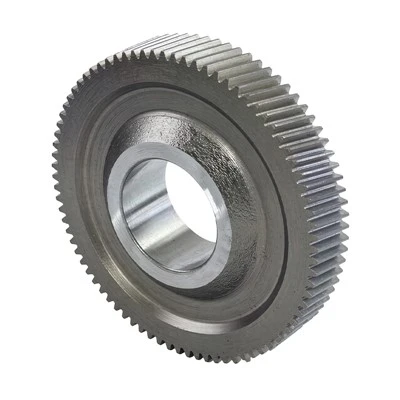
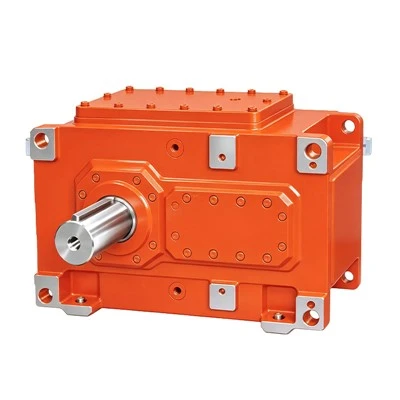
Gears are generally categorized into five types: spur gears, helical gears, circular-arc gears, involute gears, and worm gears.
ISpur Gears
Spur gears are among the most common types of gears. They are characterized by a straight tooth profile and a cylindrical tooth surface. They offer high transmission efficiency and low noise, and are frequently used in low- to medium-speed transmission systems, such as those found in various machine tools and marine equipment.
IHelical Gears
Helical gears form the basis of helical gear mechanisms. Unlike spur gears, they feature teeth that are cut at an angle (helical) relative to the axis of rotation. Known for their ability to transmit high power and support heavy loads, they are used in various high-speed, heavy-duty transmission systems, such as automotive differentials.
Circular-Arc Gears
Circular-arc gears are defined by the curved shape of their tooth profiles-specifically, an arc-shaped profile. They are well-suited for transmission systems requiring large gear ratios; they operate smoothly while being capable of handling significant torque.
Involute Gears
Involute gears are a common type of high-speed gear. Their tooth profiles follow an involute curve, which helps reduce contact stress on the tooth surfaces. This design minimizes noise and vibration during high-speed operation, making them ideal for various types of automated equipment and high-speed machinery.
Worm Gears
Worm gears are gear mechanisms designed for applications involving significant changes in the angle of power transmission. They are characterized by excellent resistance to back-driving (reversing) and are typically used in low-speed, high-power transmission systems, such as those found in heavy-duty industrial equipment and machinery.
In summary, different types of gears are suited to different mechanical transmission applications, each capable of meeting specific operational requirements and performance goals. Therefore, when designing or selecting gears, it is essential to choose the appropriate type based on the specific needs and transmission requirements of the machinery.